Veneers, Crowns & Bridges in Ayoor, Kollam

A patient once arrived carrying three different opinions about a damaged front tooth. One dentist had suggested a veneer. Another had recommended a crown. A third had advised removing the tooth and replacing it with a bridge.
All three opinions were technically correct. That is the uncomfortable reality behind cosmetic and restorative dentistry. The right treatment often depends less on the tooth's appearance and more on what remains underneath it.
That is why conversations about Dental Veneers and Crowns in Ayoor, Kollam often become more complicated than patients expect.
Understanding Veneers: Minimally Invasive, But Not a Cure-All
A veneer removes surprisingly little tooth structure. In ideal situations, only a thin layer of enamel is reshaped before a custom porcelain shell is bonded to the front surface. When the tooth is healthy, properly aligned, and structurally sound, a veneer can transform colour, shape, spacing, and minor irregularities without aggressive drilling.
The problem is that patients frequently assume veneers can fix everything. They cannot.
A tooth with a large filling, deep fracture, extensive decay, or weakened internal structure rarely behaves like a good veneer candidate. Covering the front surface may improve appearance while leaving the underlying weakness untouched.
The Functional Role of Dental Crowns
That is where crowns enter the discussion. Crowns tend to have an unfair reputation because they involve more preparation. Patients often hear phrases such as "filing down the tooth" and immediately become anxious. Yet a crown is often the more conservative choice when viewed over a longer timeline.
A heavily restored molar that cracks during chewing may survive another decade with a well-designed crown. The same tooth fitted with a veneer for cosmetic reasons could continue deteriorating beneath the surface. I often notice patients focusing on how much tooth is removed rather than how much tooth is saved. Those are not always the same thing.
Front Teeth Dilemmas and the Role of Orthodontics
Front teeth create another dilemma. Someone may arrive seeking a perfectly white smile after seeing photographs online. The teeth look healthy from a distance. Examination reveals multiple old fillings, enamel wear, and small fractures hidden near the edges. At that point, recommending veneers simply because they appear less invasive becomes difficult. Sometimes a crown provides better long-term predictability.
Sometimes neither option is appropriate. A small amount of orthodontic movement can occasionally produce a better result than extensive cosmetic treatment. That is one reason Clear Aligners in Kollam are increasingly discussed before any irreversible cosmetic procedure begins. Straightening teeth first may reduce the number of veneers or crowns required later. The internet rarely mentions that.
The Impact of Bite Forces
Patients also underestimate the role of bite forces. A veneer placed on a person who grinds their teeth every night faces a very different future compared with the same veneer placed on someone with a stable bite. Porcelain is durable. It is not indestructible.
Small chips usually occur at the edges. Large failures often occur because the underlying planning was incomplete.
The Considerations Behind Dental Bridges
Bridges introduce a separate set of considerations. Replacing a missing tooth sounds straightforward until the neighbouring teeth are examined. If those adjacent teeth already contain large restorations, using them as bridge supports may be entirely reasonable. If they are untouched and healthy, sacrificing tooth structure to support a bridge deserves careful thought.
Patients sometimes arrive convinced that a bridge is outdated because implants receive most of the attention online. That is not always fair. A well-constructed bridge can function successfully for many years when the supporting teeth are healthy and the bite is favourable. In certain medical situations, financial circumstances, or anatomical limitations, a bridge remains a sensible treatment rather than a compromise.
The challenge lies in selecting cases properly. Poor oral hygiene destroys bridges faster than poor craftsmanship. Food trapping around bridge margins remains one of the most common causes of failure. The restoration itself may look excellent while decay quietly develops underneath the supporting teeth.
People are often surprised by how much maintenance a bridge requires. Special flossing techniques become part of daily life. Ignoring them usually catches up eventually.
Prioritising Function Over Appearance
Discussions about dental veneers and Crowns in Ayoor, Kollam frequently centres on appearance. Colour receives enormous attention. Shape receives almost as much. Function receives very little.
A restoration that photographs beautifully but interferes with speech, chewing, or comfort cannot be considered successful. Patients usually discover this quickly. Certain sounds become difficult to pronounce. The tongue repeatedly contacts an unfamiliar surface. Minor bite discrepancies feel enormous because teeth contain highly sensitive pressure receptors.
The adjustment period varies widely:
Some patients adapt within days.
Others remain aware of subtle changes for weeks.
Structural Protection After Root Canal Treatment
Root canal treatment creates another area of misunderstanding. After a successful Root canal in Ayoor, patients occasionally believe the tooth has been permanently repaired. The infection may indeed be resolved, yet the tooth itself often becomes more vulnerable to fracture because significant structure has already been lost through decay, access preparation, or previous restorations.
A crown is frequently recommended not because the root canal failed but because it succeeded. Protecting the remaining tooth becomes the next priority. That distinction matters.
A common mistake involves delaying the crown for months or even years after root canal treatment. The tooth feels comfortable, so the urgency disappears. Then a crack develops during a routine meal. Repair options become far more limited.
The Shift Toward Natural Aesthetics
Cosmetic expectations have also changed dramatically during the past decade. Patients no longer request unnaturally bright smiles as often as they once did. The trend has shifted toward natural translucency, subtle texture, and age-appropriate aesthetics.
That sounds simple. Achieving it is not. Natural teeth contain variations that machines struggle to replicate. Tiny imperfections create realism. Eliminating every imperfection sometimes creates an artificial appearance that patients later regret.
The best veneer cases are often difficult to identify from across a room. Nobody notices the dentistry. They simply notice an attractive smile.
Transparency in Clinical Planning and Material Costs
Price conversations deserve honesty as well. Cheaper treatment can become expensive. Expensive treatment can become poor value.
The quality of planning matters more than many patients realise. Diagnostic photographs, bite analysis, shade selection, laboratory communication, and material selection influence outcomes long before any tooth preparation begins. Skipping those steps occasionally reduces immediate costs while increasing long-term risk.
Not every clinic approaches planning with the same level of detail. That is worth remembering when comparing quotations from a dental clinic or elsewhere.
The Complexity of Material Selection
Material selection creates further complexity. Porcelain, zirconia, composite, layered ceramics, monolithic restorations — each carries strengths and weaknesses. The strongest material is not automatically the most aesthetic. The most beautiful material is not automatically the most durable.
Compromise is built into every treatment decision. Patients searching for certainty often find that frustrating. Dentistry rarely offers certainty. It offers probabilities.
The strongest opinions are often expressed by people who have not examined the tooth. A veneer may last fifteen years. A crown may fail after five. A bridge may outlast both.
The outcome depends on factors extending far beyond the restoration itself: oral hygiene, grinding habits, dietary patterns, bite forces, existing tooth structure, laboratory quality, and simple biological variation. That complexity explains why treatment recommendations sometimes differ between clinicians acting in good faith.
When discussing Dental Veneers and Crowns in Ayoor, Kollam, the question worth asking is not which treatment sounds more modern or more cosmetic. The better question is whether the proposed restoration matches the condition of the tooth today and the forces that the tooth will face tomorrow. Those two things rarely appear in photographs. They determine almost everything.
How Do Veneers, Crowns, and Bridges Improve Your Smile and Oral Health?
Appearance is the obvious benefit. Function is often the bigger one.
A cracked molar that receives a properly fitted crown can return to normal chewing without the constant fear of fracture. A bridge can prevent neighbouring teeth from drifting into an empty space. Veneers can restore symmetry when front teeth have uneven edges caused by wear.
The oral health benefits are less visible. Food traps around damaged teeth frequently become areas where plaque accumulates. Poorly shaped restorations can irritate gums. Correctly designed crowns and bridges often make cleaning easier and reduce ongoing irritation.
Not always. An oversized crown can create new cleaning challenges. A bridge that is never flossed underneath can become a plaque trap. The quality of the treatment matters as much as the treatment itself.
Are Veneers the Best Option for Chipped, Stained, or Uneven Teeth?
Sometimes. Not always.
A small chip often does not justify removing healthy enamel for a veneer. Direct composite bonding may achieve a similar result with less intervention.
Staining creates another grey area. Surface stains from tea, coffee or tobacco frequently respond to professional cleaning or whitening. Deep internal discolouration behaves differently. Certain tetracycline stains, developmental defects and old root canal-related darkening may require veneers or crowns for predictable colour correction.
Patients occasionally arrive convinced they need six or eight veneers because they have seen dramatic smile makeovers online. A closer examination may reveal that two teeth need treatment, and the remaining teeth are perfectly healthy.
Over-treatment remains a concern in cosmetic dentistry. The most conservative option is not always the most profitable option. That reality deserves discussion. For patients considering dental veneers and crowns in Ayoor, Kollam, the goal should be achieving the desired appearance with the least removal of healthy tooth structure.
Can Dental Crowns Protect Weak or Damaged Teeth?
Crowns were designed for exactly that purpose. A tooth weakened by a large filling behaves differently under chewing pressure. Thin remaining walls can flex and eventually fracture. A crown redistributes forces across the tooth and reduces the risk of catastrophic breakage.
Yet crowns are not indestructible. A crown placed on a tooth with severe gum disease may fail because the supporting tissues fail. A patient who clenches heavily during sleep may experience repeated stress. A crown cannot compensate for every underlying problem.
The phrase "I already have a crown, so the tooth is protected forever" causes disappointment more often than people realize. Nothing in dentistry lasts forever.
Do Veneers and Crowns Look Like Natural Teeth?
The answer today is usually yes. The difference between modern ceramic materials and older restorations is remarkable.
Older crowns often had an opaque appearance. Light reflected differently from natural enamel. The result looked artificial under daylight. Modern ceramics allow light transmission closer to natural teeth. Skilled dental technicians can replicate tiny colour variations, translucency near the edges and subtle surface textures.
Patients sometimes focus entirely on shade selection. Shape is usually more important. A bright white restoration with poor proportions attracts attention for the wrong reasons. Slightly softer shades with natural contours generally produce more convincing results.
The best veneers rarely announce themselves. People simply assume the teeth have always looked that way. Anyone researching Dental Veneers and Crowns in Ayoor, Kollam should ask to see examples of completed cases that resemble their own situation rather than dramatic celebrity-style transformations.
Is a Crown Recommended After Root Canal Treatment?
Frequently, yes. Not automatically. Front teeth and back teeth behave differently.
A front tooth treated with a Root canal may sometimes function well with a filling if sufficient tooth structure remains. Molars face far greater chewing forces. After root canal treatment, these teeth often become more vulnerable to fracture because significant tooth structure has already been removed during decay and treatment. This is why crowns are commonly recommended for root canal-treated back teeth.
Delaying the crown is a mistake seen repeatedly. The root canal may be completed successfully, symptoms disappear and the patient postpones the final restoration. Months later the tooth fractures below the gum line and becomes impossible to save. The root canal was successful. The delay was not.
Modern Restorative Trends at Pranah Dental Clinic
Missing teeth create a different challenge. Bridges remain a valuable solution, despite the popularity of implants. Not every patient is suitable for implant surgery. Medical conditions, bone limitations, financial considerations, and personal preference all influence treatment choices. A well-designed bridge can function effectively for many years.
Poor planning creates problems. Supporting teeth that are already compromised may struggle under additional load. Careful case selection matters. At a busy Dental clinic in Kollam, the most successful long-term bridge cases tend to be those where patients commit to maintenance and regular reviews rather than assuming treatment is finished forever.
An interesting trend involves younger adults combining cosmetic and orthodontic treatment. In situations where teeth are crowded or uneven, Clear Aligners may reduce the need for extensive veneers by moving teeth into better positions first. The final restorative work becomes more conservative. That approach often preserves more natural enamel.
When discussing dental veneers and crowns in Ayoor, Kollam, the conversation should not begin with materials, colours, or prices. It should begin with diagnosis. The same visible problem can have several very different causes. Two patients may both present with worn front teeth. One may need veneers. The other may need treatment for grinding habits before any cosmetic work begins. Ignoring the cause usually shortens the lifespan of the result.
FAQ
How long do veneers, crowns, and bridges last?
Ten to fifteen years is often quoted, though real-world outcomes vary considerably. Some restorations fail earlier because of grinding, poor oral hygiene, or untreated gum disease. Others remain functional for much longer.
Can I eat normally after getting a crown or bridge?
In most cases, yes. Hard objects such as ice, betel nut, bottle caps, and similar items remain risky. Even strong ceramic restorations have limits.
Are veneers only used for cosmetic purposes?
No. They are commonly chosen for aesthetic improvement, though they may also restore worn edges, minor fractures, and enamel defects that affect function.
What materials are used for dental crowns and bridges?
Modern restorations commonly use zirconia, porcelain, ceramic and porcelain-fused-to-metal designs. Material selection depends on tooth position, bite forces, appearance requirements, and available space.
When should I replace an old crown or bridge?
Replacement may be needed when decay develops around the margins, the restoration becomes loose, fractures occur, gum recession exposes underlying areas or repeated discomfort appears. Age alone is not always a reason for replacement.
Contact
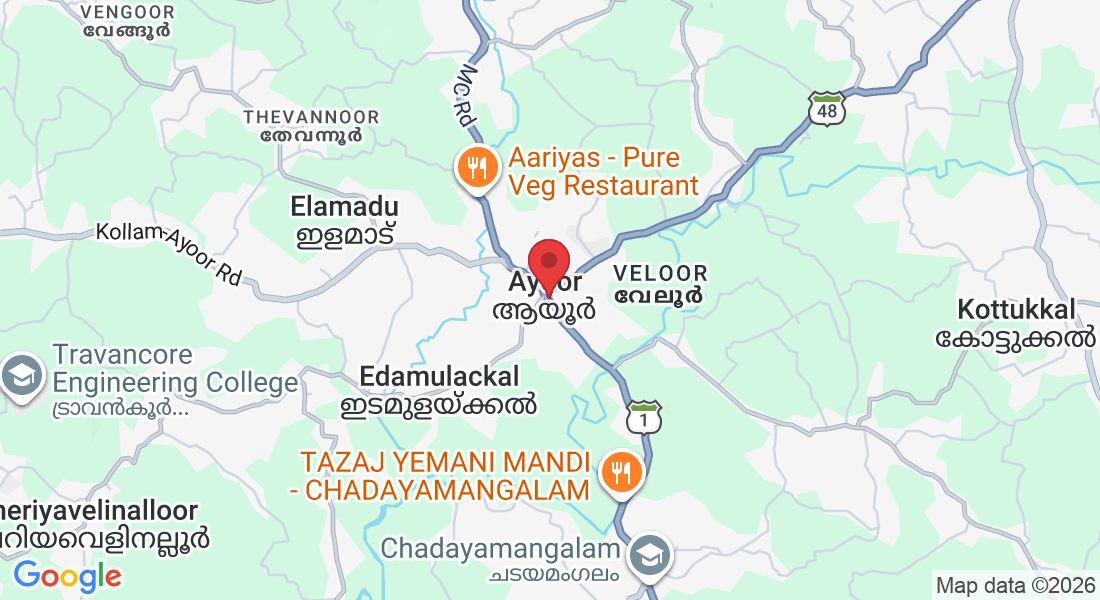
PRANAH Orthodontic Centre & Family Dental Clinic,
Akamon Ayoor PO, Kollam Kerala 691533
098952 25236
Working Hours
9am - 6pm (Mon - Sat)
Sun - Appointment Only


© 2026 PRANAH Orthodontic Centre & Family Dental Clinic. All rights reserved.